← All work
Economics · Simulation · 2026
Waste Tax Model
A policy model asking whether taxing household waste could stand in for federal income and payroll revenue, using calibrated CEX and EPA proxies, a range of progressive designs, and an incidence analysis of who actually bears the cost.
Problem
A trash-based tax sounds neat in theory, but it could land very unevenly across households.
Approach
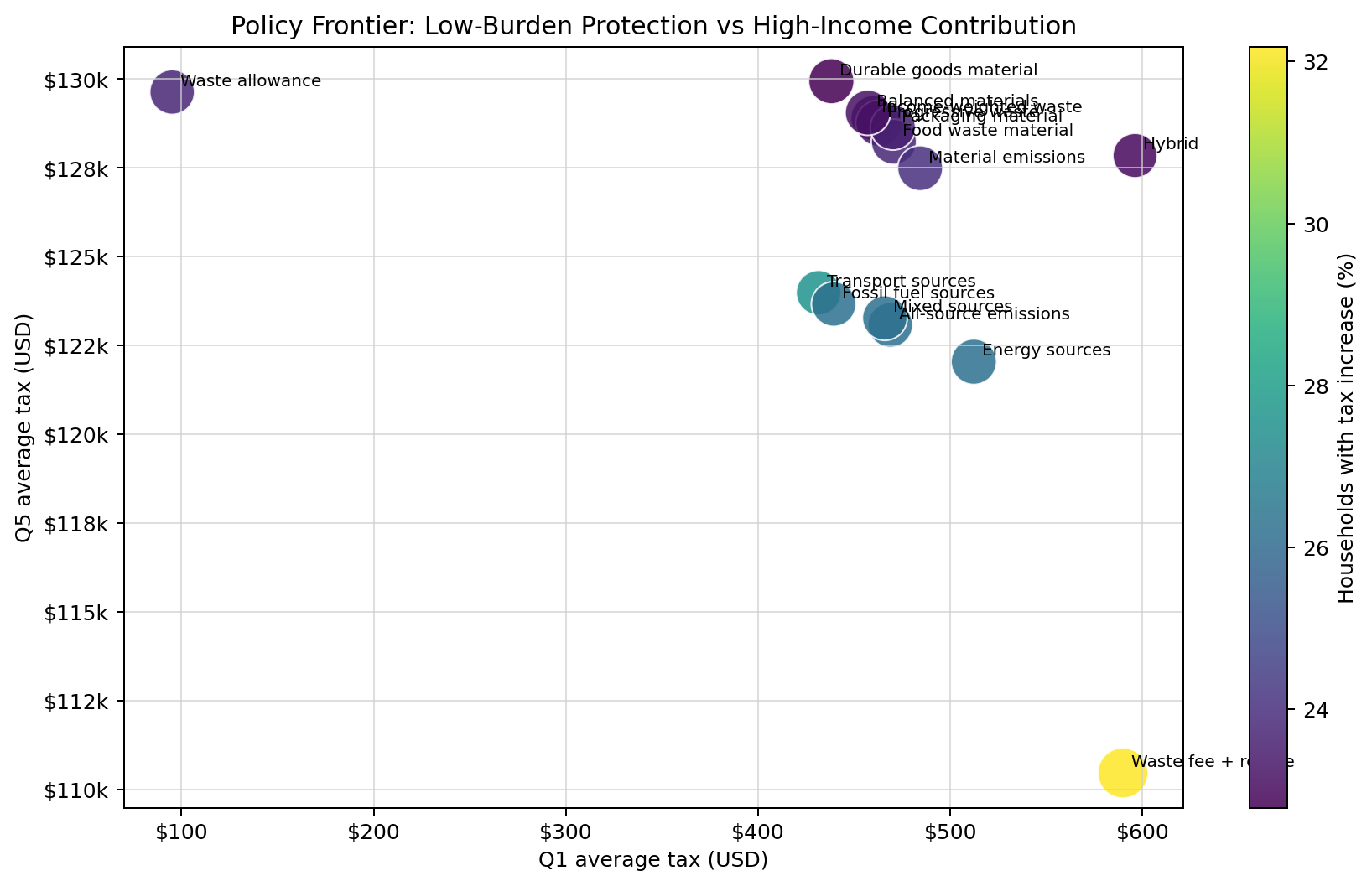
I calibrated household waste to national totals, joined it with income and survey weights, and compared progressive versions against a scaled version of today's taxes.
Outcome
It turns out the idea only works with strong progressivity or an income component. Otherwise the cost falls hardest on lower- and middle-income households.